
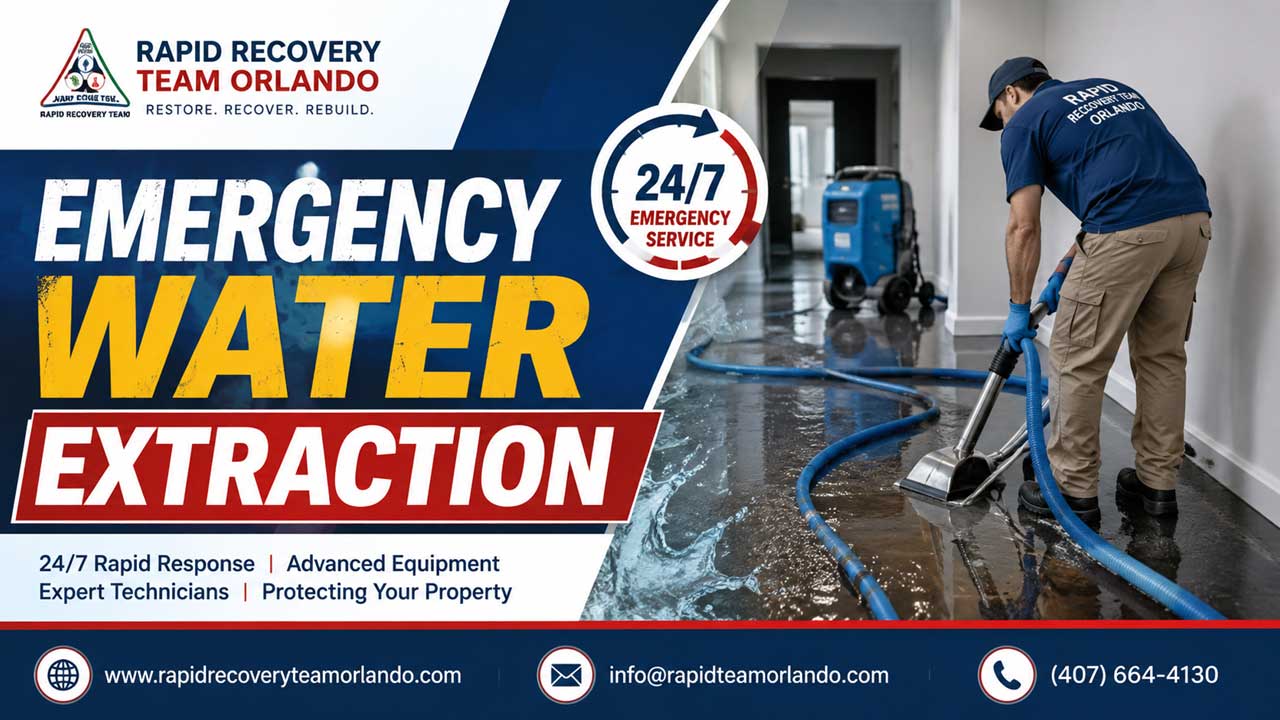
Water can suddenly flood your home. And everything will be gone within minutes. Emergency water extraction removes standing water. This must be done before it can cause further damage to floors, walls, furniture, & other building materials. Knowing what to do immediately is important. Also, people must know when to call a professional. Staying conversant on such topics can help limit damage. Plus, this can speed up the restoration procedure.
Water damage can result from burst pipes or storms. Or it can be a result of appliance failures, plumbing issues, or flooding. Removing visible water may seem like the main priority. But hidden moisture can continue ruining your property. So, this must be addressed properly. Expert evaluation & drying are significant chapters of recovering after huge water damage.
What Is Emergency Water Extraction?
Emergency water extraction is the process of quickly removing standing water. In this procedure, water is eradicated from a building after flooding, leaks, etc. It uses specialized equipment. Thus, professionals can extract water. They can reduce moisture levels & stop further damage to building materials. After extraction, affected areas are dried. Such places are cleansed & inspected.
What Should You Do Immediately After Water Damage?
1. Stop the Water Source if It Is Safe
Has the water damage been caused by a leaking pipe, appliance, or plumbing issue? Then, turn off the main water supply. But make sure that you do this safely. Stopping the source can prevent extra water from getting inside the building.
2. Turn Off Electricity in the Affected Area
Water & electricity can create serious safety issues. Avoid entering flooded areas where electrical units may be affected. If needed, call a professional. He can handle the situation safely.
3. Move Valuable Items to a Dry Area
If it is safe, then try moving furniture & critical papers. Keep all the electronics & personal stuff away from damaged places. Quick action may reduce damage to precious items.
4. Document the Damage
Take photos & videos of affected areas before cleanup starts. This documentation can be useful when speaking with your insurance provider.
5. Avoid Contaminated Water
Do not attempt cleanup if the water contains sewage, chemicals, or harmful contaminants. Contaminated water requires proper safety procedures. Plus, professional handling is a must in such cases.
6. Contact a Professional Restoration Company
Significant water damage requires specialized equipment & expertise. Professional restoration teams can assess the damage and get rid of water. Then, they begin the drying procedure.
When Do You Need Emergency Water Extraction?
Emergency water extraction may be important after:
- Burst pipes
- Flooding
- Appliance leaks
- Toilet overflows
- Water heater failures
- Roof leaks
- Storm damage
- Sewage backups
- Big plumbing leaks
In such cases, emergency water removal is the most viable option. This can reduce the amount of time water stays inside the building. Professional water extraction services can remove standing water. Plus, these can deal with dampness that may not be seen.
Why Is Fast Water Extraction Important?
Prevents Further Structural Damage
Standing water can weaken materials. Examples are drywall, wood flooring, insulation, etc. Quick extraction limits prolonged exposure to dampness.
Reduces Mold Risk
Moist environments can create ideal circumstances for mold. Removing water & properly drying affected areas can cut this risk.
Protects Flooring and Drywall
Water can cause swelling, warping, & staining. Also, people can experience deterioration of flooring & drywall. Quicker removal saves such materials.
Reduces Odors
Trapped moisture can generate bad smells. Proper drying & cleaning improve interior conditions.
Stops Secondary Damage
Water damage can spread outside the original damaged area. Professional extraction identifies & solves moisture. Professionals will do this before additional problems show up.
How Does Emergency Water Extraction Work?
Step 1- Inspection and Water Damage Assessment
Professionals inspect the property. Hence, they can determine the extent of water damage & find out affected materials.
Step 2- Identify the Water Source
The source of the water intrusion must be dealt with urgently before restoration begins.
Step 3- Remove Standing Water
Strong extraction equipment is used to remove visible water from damaged areas.
Step 4- Extract Water From Flooring and Materials
Specialized tools remove moisture. This can be present in carpets, flooring, etc.
Step 5- Measure Moisture
Moisture meters identify hidden water that may be out-of-sight.
Step 6- Dry and Dehumidify the Property
Air movers & dehumidifiers remove remaining moisture. These support correct drying.
Step 7- Clean and Sanitize Affected Areas
Cleaning and sanitization help restore affected spaces. This can remove contaminants.
Step 8- Final Moisture Inspection
A final checkup confirms if moisture levels have returned to desired states.
How Quickly Should Water Be Extracted After a Flood?
Water should be removed as soon as possible after significant flooding/water disturbance. People must not let the materials remain wet for a long time. Otherwise, the chances for structural damage, odors, and secondary issues increase.
The required drying time varies. It depends on the amount of water, damaged items, & if the water is clean/impure. Professional judgment is significant for wide-ranging flooding/hidden moisture.
How Long Does Emergency Water Extraction Take?
The time taken hinges on-
- Amount of stagnant water
- Size of the area damaged
- Water source
- Kind of flooring
- Wall materials
- Accessibility
- Concealed moisture
- Total damage severity
A small water issue may be resolved quickly. On the other hand, larger losses may require more drying & checking.
What Equipment Is Used for Emergency Water Extraction?
Water Extraction Pumps
These pumps remove large amounts of standing water. These can achieve this quickly after a flood.
Commercial Wet Vacuums
Wet vacuums extract water from smaller areas & damaged surfaces.
Truck-Mounted Extraction Equipment
This equipment provides powerful extraction capabilities for bigger water damage scenarios.
Air Movers
Air movers increase airflow. These speed up drying.
Dehumidifiers
Dehumidifiers remove moisture from the air & affected materials.
Moisture Meters
These tools spot moisture levels in walls, floors, & other stuff.
Thermal Imaging Cameras
Thermal cameras identify areas with secret dampness that can’t be seen.
Can You Remove Standing Water Yourself?
DIY cleanup may be suitable for very small, clean-water spills. Still, professional extraction is recommended when-
- Large areas are damaged
- Water has entered walls/flooring
- Flooding has happened
- Sewage/contaminated water is involved
- Electronic systems may be affected
- Suspected unknown moisture
Professional water removal services use specialized tools. Hence, professionals are able to eradicate water. Using pro gear, they can do this more thoroughly than general home equipment.
How Much Does Emergency Water Extraction Cost?
The price of urgent situation water extraction hinges on many factors. These comprise-
- Amount of stagnant water
- Size of affected area
- Kind of water damage
- Equipment needed
- Labor involved
- Drying requirements
- Cleaning & sanitization requirements
- Repairs/reconstruction
There is no fixed cost. This is because every water damage is different. A professional inspection can offer a more precise quotation.
Does Homeowners Insurance Cover Emergency Water Extraction?
Coverage depends on the insurance policy. Also, the cause of damage & exact situations matters.
Insurance may cover certain situations. See below-
- Unexpected pipe bursts
- Accidental appliance leaks
- Certain storm-related damage
Still, gradual leaks, flooding, or sewage damage may have dissimilar coverage necessities.
People should document damage & keep records. They should call their insurance provider as soon as possible.
What Happens If Water Damage Is Not Extracted Quickly?
Delaying water extractions results in-
- More structural damage
- Damaged flooring
- Ruined drywall
- Secret moisture issues
- More mold risk
- Bad odors
- More wide-ranging restoration requirements
Quick action can make the recovery process simpler. This reduces chances for future damage.
Emergency Water Extraction in Orlando
Orlando properties can experience water emergencies. These are caused by heavy rainfall & tropical storms. Also, there can be plumbing failures, roof leaks, or flooding. Both residential and commercial properties may require a fast response. This is mainly true if there is any unexpected water damage.
Rapid Recovery Team Orlando provides professional water damage restoration services in Orlando. We help property owners with water extraction, drying, & cleanup after water calamities.
Our team assesses damage. They will remove excess water & support the restoration process. They carry professional equipment & experience.
Conclusion:
Emergency water extraction should begin right after major water damage. People must opt for removing standing water. They need to find out hidden dampness. Properly drying affected materials can help reduce secondary damage. Thus, restoration can become handier.
Has your Orlando property experienced flooding? Is it a burst pipe? Or is it a major water emergency? Professional assessment can determine the safest & most effective next steps.
Contact us today! Get reliable emergency water extraction services & expert assistance 24/7.
FAQs
Q. What should I do immediately after water damage?
Ans: Stop the water source if possible. You also need to avoid electrical hazards. You should document the damage. Then, you can contact a professional restoration company. They can help with assessment & cleanup.
Q. Who can remove water from my basement?
Ans: Professional water damage restoration companies can remove basement water. They will use pumps, extraction gear, & drying devices.
Q. What to use to extract water?
Ans: For small spills, a wet vacuum may help. Large water problems usually require professional extraction apparatus.
Q. How to get water out of basement quickly?
Ans: The fastest option is professional water extraction. The reason is that commercial pumps & drying equipment will be used. These are built for water emergencies.
Q. How much does emergency water extraction cost?
Ans: The cost depends on the amount of water. Also, the damage severity, equipment required, & drying requirements are important. A professional inspection provides the most precise quotation.

