
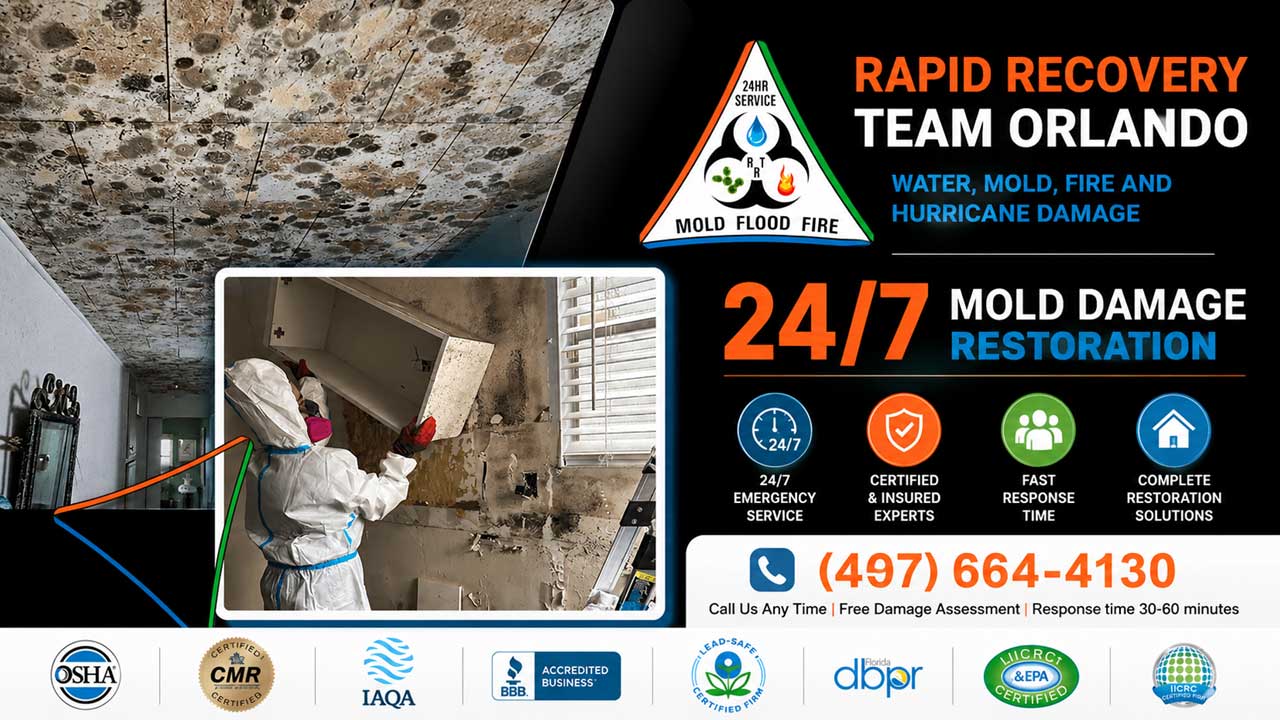
Mold remediation is a professional process. This can address mold growth. People can address the moisture conditions that caused it. They can also restore affected areas to a safe condition. Simply wiping visible mold from a wall may not resolve the underlying problem. See if moisture remains. Then, mold can return. It can even potentially spread to other parts of the building.
Knowing how professional remediation works is important. This can make it easier to recognize when expert assistance is required. Are you living in Clermont or are you residing in the surrounding Orlando area? Then, you must opt for a proper approach focusing on removing noticeable damage. This also concentrates on controlling moisture. Plus, it is about containing affected areas. Then, the areas must be cleansed & contaminated materials needs to be removed. Thus, you can verify that the work has been finished effectively.
What Is Remediation of Mold?
This process involves a series of steps. These can control & remove mold contamination from an interior background. The process can vary. This depends on the amount of growth & the affected materials. Also, the source of moisture & the building’s layout are important factors in this case.
Professional remediation generally includes-
- Knowing the source of moisture
- Checking affected & potentially damaged areas
- Securing the workplace if required
- Removing/cleaning dirty items
- Using the right equipment & protective measures
- Drying the place
- Cleaning the nearby area
- Solving the conditions which allowed mold to develop
The objective is simply to make mold disappear from view. A successful remediation project should solve the fundamental moisture issue. It needs to reduce the chances for cyclical growth.
Mold Inspection Comes Before Mold Remediation Services
Don’t randomly book mold removal services. Professionals need to understand where the mold is located. They also must know why it developed.
A mold inspection Orlando FL service can help identify visible & suspected mold growth. It can find out moisture problems & water intrusion. This way, you can also locate areas that may require further evaluation. Inspections determine the right response.
Common warning signs are:
- Musty/persistent odors
- Visible discoloration on walls/ceilings
- Water stains
- Last flooding or leaks
- Damp drywall, flooring, or insulation
- Condensation/persistent humidity
- Mold growth around bathrooms/other moisture-prone areas
Not every dark stain is necessarily mold. So proper assessment can be useful. This is mainly true before starting wide-ranging overhaul work.
Step 1: Identify and Correct the Moisture Source
Mold needs moisture to grow. Therefore, identifying the source of moisture is one of the most important mold remediation steps.
Potential sources can include:
- Plumbing leaks
- Roof leaks
- Flooding
- AC issues
- Condensation
- Bad ventilation
- Too much interior dampness
- Water intrusion around windows/doors
People must not let leaking pipes or roofs introduce moisture into the property. Removing existing mold without correcting the leak may only offer a provisional answer.
Step 2: Contain the Affected Area
When appropriate, experts may set up containment around areas with mold growth. The purpose is to reduce the possibility of disturbing contaminated materials. Also, the spreading mold particles need to be regulated from entering unaltered parts of the property.
The containment approach depends on the size & location of the affected area. Larger or more complicated contamination may demand wider regulations.
Professionals may also use appropriate personal protective equipment. They are well trained in using specialized equipment according to the building condition.
Step 3: Remove or Clean Contaminated Materials
The next stage is about determining which materials can be cleaned. This also comprises considering which stuff may need to be removed.
Porous materials can get significantly affected. These may not always be suitable for simple surface cleaning. Damaged drywall, insulation, carpet, or other absorbent items may require removal. But this is going to depend on the situation.
Materials that can be safely retained may undergo professional cleaning & treatment.
Here, professional mold removal differs from simply spraying a household solution on visible growth. The right approach considers the material & extent of contamination. Plus, the moisture conditions & chances for hidden growth matter.
Step 4: Clean the Area and Address Remaining Contamination
Firstly, the affected materials need to be removed or cleaned. Then, the surrounding area can be treated. But for this purpose, appropriate cleaning methods and equipment are also needed.
The specific techniques used depend on the property & contamination type. Professionals may use specialized cleaning equipment. Thus, they can remove settled particles & debris from ruined areas.
The aim is to leave the environment clean. Meanwhile, it is also about preventing unnecessary disturbance of impure items.
Step 5: Dry the Property Thoroughly
Moisture control remains important all through the project. Areas affected by water or excessive humidity need to be correctly dried.
Depending on the situation, professionals may use:
- Air movers
- Dehumidifiers
- Moisture meters
- Other drying equipment
Proper drying addresses the conditions supporting mold development.
Step 6: Restoration After Mold Removal Services
Remediation of mold & reconstruction are not the same. Firstly, the contaminated materials need to be removed. Then, the affected area should be cleansed & dried. Damaged building materials may need to be repaired or replaced.
This can include replacing drywall & flooring. This can also include changing insulation, trim, or other components. See if these are ruined by moisture/removal work.
Mold removal services may therefore be 1 part of a wider property overhaul project.
Mold Remediation vs. Mold Removal
People often use the terms “mold removal” & “mold remediation” interchangeably. But they can describe multiple aspects.
Mold removal focuses on physically removing mold-contaminated materials or growth. Remediation solves the contamination & moisture source. This is also about removing affected materials & cleaning. Also, the containment & prevention of recurrence need to be addressed.
The goal of mold removal in Orlando is not to make noticeable mold disappear. The fundamental circumstances also need to be dealt with.
What Kills Mold Permanently?
There is no single household product that mold will never return. Mold growth is intimately linked to moisture. Thus, eliminating the moisture source is an important part of long-term regulation.
Only cleaning visible mold without repairing a leak isn’t a good option. Also, just reducing excessive humidity or solving water intrusion may allow the issue to return.
For contamination, professional assessment & remediation can provide a more comprehensive response. So, homeowners must not always depend on household cleaning products.
What Kills Black Mold Instantly?
People are searching for what kills black mold instantly. This leads to suggestions involving household chemicals. Still, simply killing mold on the surface isn’t enough. It does not necessarily solve the 100% contamination issue.
Mold can be present beyond what is immediately visible. So, porous materials can be affected beneath the surface. Some cleaning products can also create hazardous fumes. Even if they can damage building materials if used improperly.
Are you suspecting extensive or persistent mold contamination? Then, professional evaluation & mold damage restoration is a safer & more complete tactic.
When Should You Hire a Mold Remediation Company?
A mold remediation company may be appropriate. See if the mold growth is associated with significant water damage. Also, check if it is located in difficult-to-access areas. See if it is beyond what can be removed through routine household cleaning.
Professional assistance can also be valuable. So, you need to determine where the dampness is coming from.
Are you dealing with substantial mold or water-related problems? Then, professional assessment can help determine the extent of the issue. Also, you can take suitable next steps.
How to Reduce the Chance of Mold Returning
After remediation, prevention is essential. Property owners can reduce the likelihood of recurring mold by controlling moisture and responding quickly to water problems.
Helpful measures are-
- Fixing plumbing leaks on time
- Addressing roof & exterior water intrusion
- Upholding the right interior humidity
- Augmenting ventilation in bathrooms & kitchens
- Drying wet materials rapidly
- Preserving air-conditioning systems
- Noticing areas ruined by last water damage
- Solving condensation issues
People must not let moisture problems persist. Even a professionally remediated area may ultimately result in new mold expansion.
Is Professional Mold Remediation Worth It?
For significant or recurring mold problems, professional mold removal can be worthwhile because the work involves more than cleaning visible surfaces. Professionals can evaluate the affected area, identify moisture sources, establish appropriate containment, remove or clean affected materials, and dry the property.
DIY cleaning may be reasonable for some very small surface issues. But larger contamination or mold associated with substantial water damage can require a more complete response.
Conclusion:
Remediation of mold is an all-inclusive process. This goes beyond cleaning visible mold. Effective remediation involves identifying the moisture source. Then, it is about assessing the affected areas. Also, people need to contain contamination when necessary. Then, cleansing or removal of damaged materials drying the property. Lastly, people must deal with conditions that could cause mold to come back.
Are you dealing with persistent mold? Or is it musty odors, water damage, or suspected hidden growth in the Orlando or Clermont area? Either way, mold remediation Clermont Heights can help you. You will be able to take the following steps.
Need help with a mold problem? Rapid Recovery Team Orlando is always ready to help you. Contact us today!
FAQs:
Q. Is professional mold removal worth it?
Ans: Professional mold removal can be worthwhile. This is when mold is extensive, recurring, and linked with water damage. This can also be located in areas that are difficult to clean. Professionals can address both visible contamination & the moisture conditions. These can cause problems.
Q. Can black mold really be remediated?
Ans: Yes. Mold contamination can generally be addressed. People will use appropriate remediation mechanisms. The process should focus on removing or cleaning affected materials. Then, it is about correcting the moisture source. People must not depend on a product that will remove mold from the surface.
Q. Is mold remediation usually successful?
Ans: Mold remediation can be successful. But people must treat the affected materials appropriately. Thus, they can remove the underlying moisture problem. Ongoing leaks, excessive humidity, or unresolved water intrusion can increase the chances for recurrence.
Q. Can you live in a house after mold remediation?
Ans: A property can be declared safe for normal occupancy. But the contamination extent & the remediation work performed need to be assessed. Also, people need to check out the condition of the property after that. Your restoration professional can provide guidance. This is based on the specific situation.
Q. How likely is mold to come back after remediation?
Ans: Mold can return if moisture problems remain. Or this can be the case if new water intrusion occurs. Homeowners need to solve the leaks, humidity, & condensation properly. They also need to fix other moisture sources. This way, they will be able to stop upcoming growth.

