
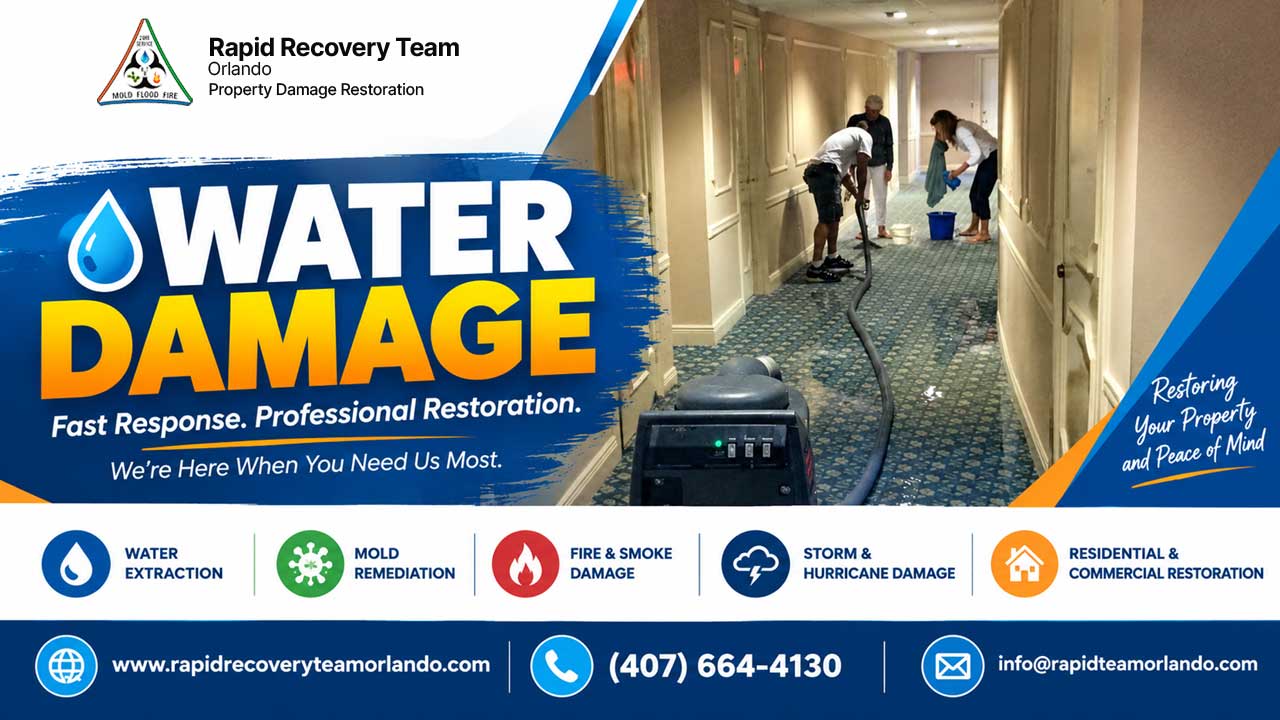
Are you wondering how long does water damage take to dry? In many cases, professionally dried areas can take around 3 à 5 days. But there is no single timeframe for each building. The damage extent, affected materials, & humidity have an impact on water damage drying time. Also, water amount & how quickly extraction begins are important factors in this case.
For Orlando homeowners, acting quickly is important. This is because warm & humid conditions can encourage mold growth. Then, moisture gets locked in a building.
How Long Does Water Damage Take to Dry?
A minor water incident affecting a small area may dry relatively quickly. More extensive damage can include walls, flooring, & insulation. Also, cabinets or structural materials can get damaged. These may take days or even longer.
Professional restoration companies use moisture meters. Thus, they are able to determine if affected materials are dry. They won’t just depend on how surfaces feel. A property may look dry. But moisture may stay beneath flooring / within walls.
What Affects Water Damage Drying Time?
There are plenty of factors determining how quickly a property dries. See below-
- Amount of water- More water requires more extraction & drying time.
- Type of material- Drywall, wood, carpet, insulation, & concrete absorb & release moisture in a different way.
- Humidity- Orlando experiences a damp environment. Such conditions slow down evaporation.
- Air circulation- Correct airflow eradicates moisture from ruined items.
- How quickly cleanup begins- Delaying extraction is a very bad choice. This can make water spread & get trapped.
- Hidden moisture- Water inside walls / beneath flooring can widen the drying process.
So, a skilled checkup is more trustworthy. No one should think that a property can get dried within an exact no. of hours.
Water Extraction Is the First Step
Don’t just panic about how to dry water damage. Firstly, standing water needs to be removed. Water extraction reduces moisture. This must be removed through evaporation & dehumidification.
Professional equipment can remove water from carpets, flooring, etc. Household fans or towels won’t work like this. After removal, technicians can know which items still carry boosted dampness levels.
Structural Drying- Why Surface Dryness Isn’t Enough
People these days are making a big mistake. They are assuming that the job is finished when the floor/wall feels dry.
Structural drying eradicates moisture that has leaked through building materials. Water can move behind drywall. It can get underneath flooring. It can get inside subfloors. Or it can also move into other areas. These may not be rapidly visible. Professional drying typically combines controlled airflow. This can also combine commercial dehumidification & moisture checking.
The goal is not simply to make a room feel dry. The affected materials need to return to a suitable dampness level.
How to Dry Water Damage Safely?
Is water damage limited? Has the source been stopped? Then, homeowners can improve ventilation. They can use fans/dehumidifiers if desired. Still, they need to avoid using electrical equipment around standing water. Neither should enter areas where electrical issues may exist.
Are you experiencing major flooding or bad water? Are you dealing with soaked drywall? Or is there dampness locked inside walls & floors? In such scenarios, professional water damage restoration is the only answer.
A restoration team can identify affected areas. It will remove stagnant water. Plus, it can maintain ideal drying conditions. Also, it can check dampness throughout the procedure.
Watch for These Signs of Hidden Water Damage
Visible puddles are not the only signs of lingering dampness. Signs of hidden water damage are-
- Musty/damp smells
- Bubbling/peeling paint
- Discolored walls/ceilings
- Warped/swollen flooring
- Soft drywall/baseboards
- Constant dampness
- Unforeseen increases in water usage
- Increased moisture readings
These symptoms indicate that water has gone outside the area you can see.
When Should You Call a Water Damage Restoration Professional?
Does your home have standing water? Are there soaked structural materials, sewage, or contaminated water? Are you seeing persistent moisture? Has water entered walls or flooring? Then, call a professional as soon as possible.
Quick water damage restoration limits secondary damage. This cuts the risk of mold. Mold can show up within roughly 2 days after moisture introduction.
Don’t Wait for Water Damage to Get Worse
Knowing how long does water damage take to dry is a must. But the more important question is if your building is really dry. Surface moisture can disappear. But water may stay hidden inside walls. It can stay locked inside flooring & other stuff.
Contact us now! Enquire about professional water extraction, structural drying, & restoration assistance. Also follow Rapid Recovery Team Orlando on Facebook, Instagram and YouTube for more update.
FAQs:
Q. How fast does mold start after water damage?
Ans: Mold can begin developing within approximately 2 days. So, people must not let moisture remain. Orlando sees warm & humid conditions. So, prompt drying is very important.
Q. How can I tell if water damage is permanent?
Ans: Water damage may necessitate total repair. This is when materials are severely warped or structurally compromised. The items can get contaminated as well. Or they are just unable to return to their previous condition. A professional checkup can determine which stuff can be restored. They can also say which demand substitution.
Q. What will draw moisture out?
Ans: Dehumidifiers, fans, & ideal ventilation can remove moisture. For significant water damage, professional drying equipment is recommended. Also, the moisture trapped within walls, flooring, etc. has to be removed.
Q. Can you live in a house with water damage?
Ans: It depends on the severity and type of damage. Minor, contained damage may not require leaving the home. But far-reaching flooding, sewage infectivity, electronic problems, framework damage, or mold can make a home hazardous. An expert examination determines if the home is apt to dwell in.

