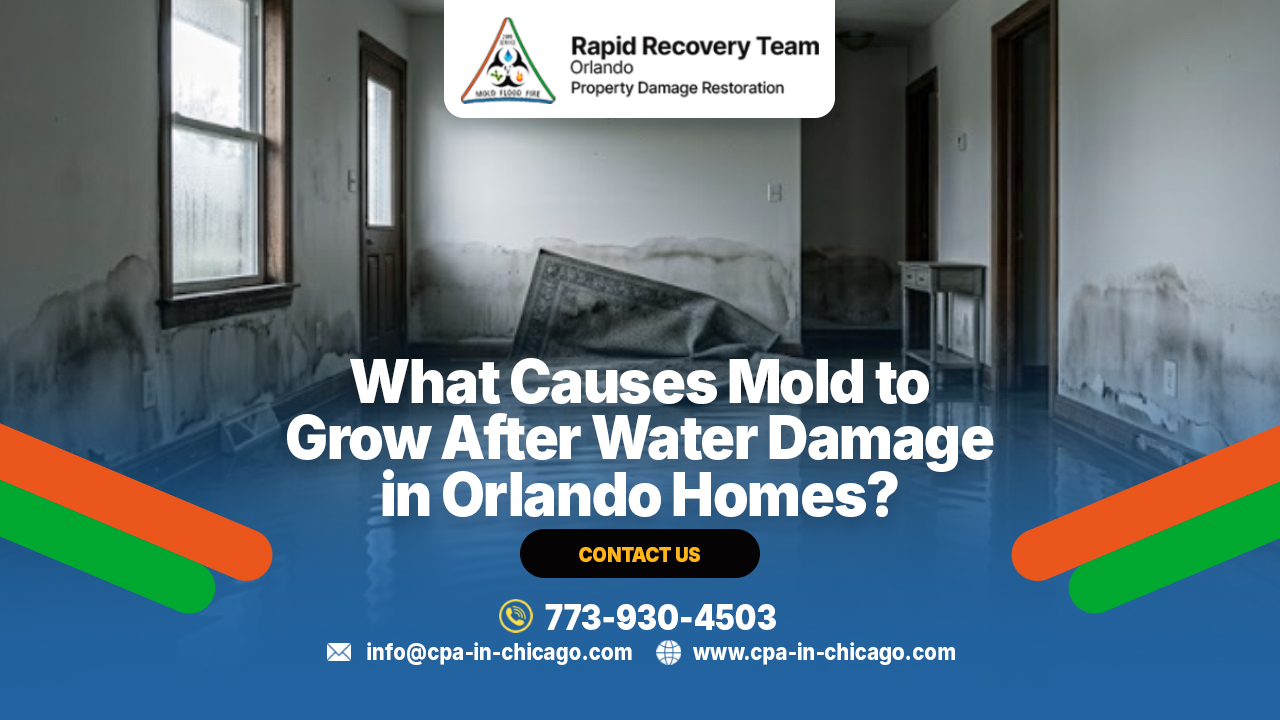
Mold after water damage is a big problem for Orlando residents. This is mainly true if leaks, flooding, or storm damage leave moisture. This dampness gets locked in a building. Mold spores can be organically present in interior & outdoor settings. But they begin growing when they encounter wet/damp materials. Drying wet areas & materials within 1st 2 days is important. This can stop mold development.
Knowing why mold develops is important. This helps homeowners recognize the warning signs. They can take action rapidly. They can do this before a small moisture problem becomes a larger problem.
Why Is There Mold After Water Damage?
Mold needs dampness to develop. Always look for a pipe leak, appliance failure, or roof leak. Be aware of flooding. Water can soak into drywall. It can get inside carpeting, wood, insulation, & other permeable items. Visible water can go. But moisture may linger. This can be present underneath flooring, behind walls, etc.
So, water damage and mold are closely linked. See if affected materials are dried properly. Otherwise, remaining moisture will support mold after water damage development.
Orlando experiences a warm & humid climate. People there can make moisture control important. Keeping indoor humidity below 60% is a good goal. This way, you can decrease mold developing conditions.
How Fast Does Mold Grow After Water Damage?
Are you wondering how fast mold grows after water damage? There is no single timeline perfect for all buildings. This is because growth depends on moisture & temperature. Plus, the materials & other ecological circumstances are vital as well.
Still, it is important to dry out damp material. This must happen within 2 days. This is because mold may begin growing. This is when moisture stays locked in.
Mold can show up after 2 days. This is an important prevention window. Mold growth may occur even when materials are dried within that period. Thus, affected areas should be checked. In such areas, there can be hidden dampness.
Common Signs of Mold After Flooding
Being aware of the signs of mold after flooding is vital. Thus, you can identify a problem early. Look for-
- Musty/earthy odors
- Dark, green, white, gray on surfaces
- Mold around baseboards/beneath flooring
- Damp drywall/walls remaining wet
- Condensation / indoor humidity
- Identifiable growth in the last flooded areas
- Returning moisture/unexplained water stains
A musty odor can be an important warning sign. This is because certain mold-related compounds can contribute to the typical mold odor.
Hidden Moisture Can Lead to Mold Growth After Water Damage
There is a top challenge after a leak or flood. You will have to find unseen moisture. Water can move beneath flooring & behind drywall. It can also seep into insulation or underneath cabinets.
Just drying the surface is never enough. No one should let the moisture stay inside the framework. Professional restoration teams can use moisture-detection equipment. Thus, they can identify affected areas. Plus, they can also keep track of the drying procedure.
When Should You Consider Mold Remediation Orlando Services?
Has visible mold appeared after a leak or flood? Or is a building continuing to have moisture problems & bad odors? Then, professional evaluation can be necessary.
Mold remediation Orlando services can include finding the source of moisture & containing affected areas. These also include removing materials. These can’t be adequately cleaned or dried. So, addressing the underlying water problem is very important. The goal should not be to clean visible mold. Homeowners also need to fix the poor moisture condition.
How to Reduce the Risk of Mold after Water Damage?
You can take several steps after water damage-
- Stop the source of water. Only do this if it is safe to do so.
- Call a professional restoration company.
- Remove standing water.
- Dry affected materials.
- Improve ventilation; reduce too much humidity.
- Check hidden areas for leftover moisture.
- Watch for bad smells or returning humidity.
Do not enter areas with electrical or structural hazards. Firstly, inspect or clean them. Safety should come 1st.
Contact Rapid Recovery Team Orlando
Mold after water damage can become a bigger problem. This happens when moisture stays hidden. Or this can also happen if affected materials are not dried promptly. Taking action early can help protect your property. This can also reduce the chances of needing too much remediation.
Have your Orlando home experienced flooding, leaks, etc.? Or are you concerned about mold? Contact us for professional water damage restoration and mold remediation assistance. Also follow Rapid Recovery Team Orlando on Facebook, Instagram and YouTube for more update.
FAQs:
Q. Is mold from water damage harmful?
Ans: Mold from water damage ruins interior air quality. This may cause health issues. This can cause disappointment. They can be allergic to mold. Or they can also have asthma. In such cases, this can be an issue. Common reactions can include sneezing. Or people may have a stuffy nose. There can also be coughing & wheezing. Patients may also face itchy or watery eyes & skin irritation. People may also have to face some dangerous lung diseases.
Q. How long does it take mold to settle in after water damage?
Ans: Mold can begin growing. This is when dampness stays on wet items. The E.P.A. recommends drying water-damaged areas & stuff. They can do this within 2 days max. This can prevent mold development. There is no exact timeframe for every property. This is because temperature & humidity can impact growth. Also, material type & moisture are serious factors.
Q. What are the first signs of mold sickness?
Ans: Initial symptoms include sneezing/nasal congestion. People also have to deal with a runny nose & coughing. Or they may face wheezing or itchy eyes. Or they may also have to face a sore throat & skin irritation. Some people may experience no symptoms at all. But symptoms persist or become harsh. Then, you can talk to a healthcare professional. You don’t need to think they are made by mold.
Q. Does homeowners insurance cover mold from water damage?
Ans: Homeowners insurance may cover mold-related damage. This is true if the mold comes from a covered water-loss event. But coverage varies by rules & situations. Mold can be caused by long-term maintenance problems. Or there can be excluded & uncovered sources. Homeowners should check their policy. They must document the damage with pictures. Then, go for contacting their insurance firm.

